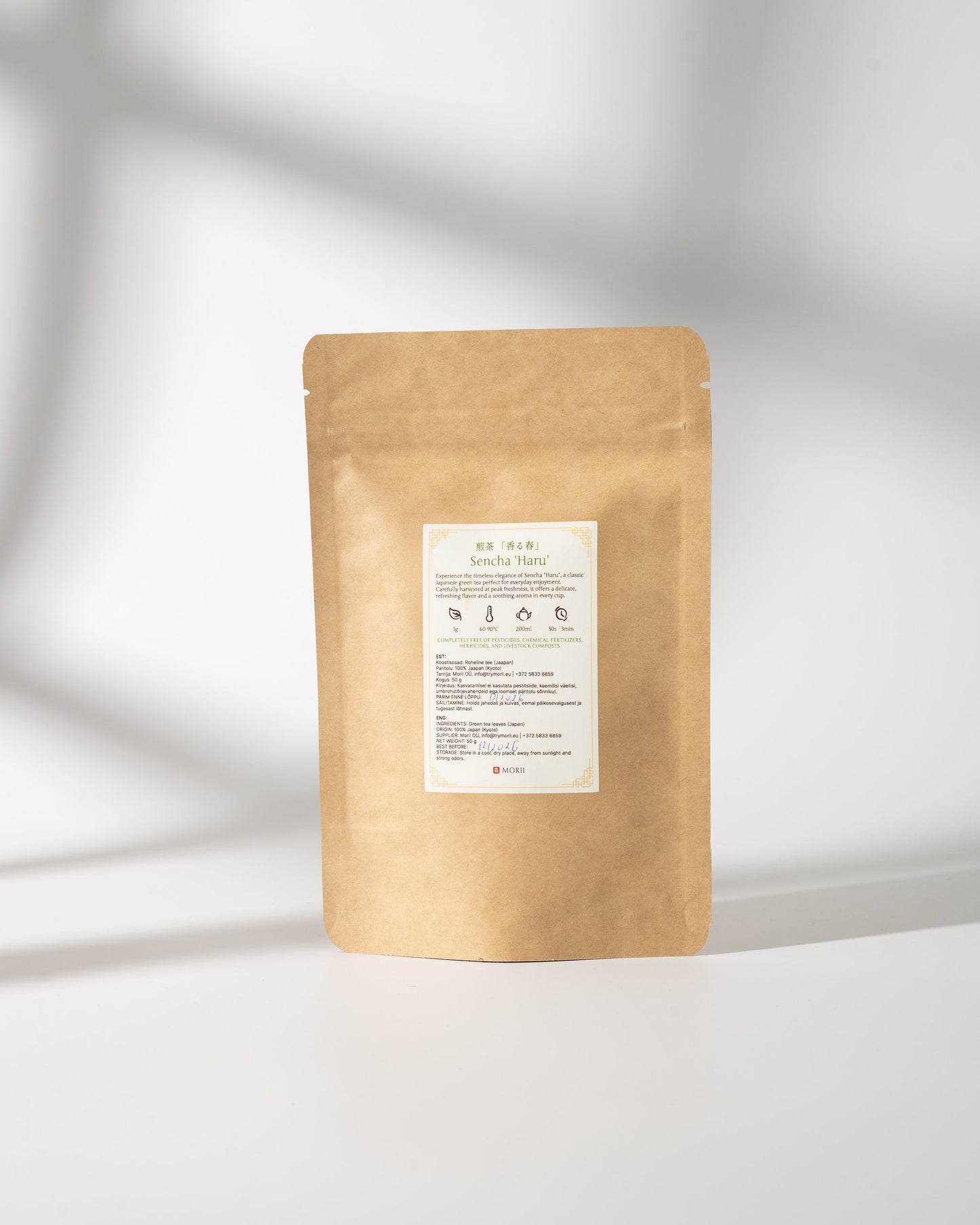
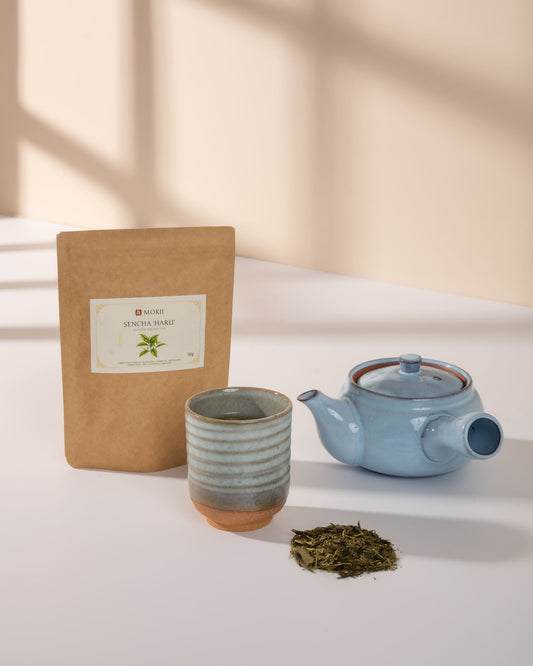
Sencha is the green tea Japan drinks every day, and this one is the spring harvest of a single farm in Kizugawa, Kyoto. The leaves are steamed within hours of picking, which locks in the fresh, grassy flavour and the bright yellow-green colour that pan-fired Chinese greens do not have. It is light, clean and refreshing, with a gentle astringency that goes well with food.
What it is
Sencha is unshaded, steamed, rolled green tea. Morii Farm picks it once, in spring, when the new shoots are soft and sweet; summer and autumn pickings never go into this bag. The cultivar is Yabukita, the classic Japanese variety known for its clean aroma.
Taste
Fresh-cut grass, young vegetables, a hint of citrus, a brisk finish. Brewed cool it leans sweet; brewed hotter it is brighter and more bracing. It is the tea to drink with a meal or when you want something lighter than kabusecha.
How to brew
Hot: 3 g per 200 ml at 70–80 °C for 45–60 seconds. Second infusion 20–30 seconds, third about a minute with hotter water. Cold brew: 5 g per litre, 4–6 hours in the fridge, for a sweet, clear summer tea. Tip from the farm: the steeped leaves are soft enough to eat; dress them with a little ponzu or soy sauce as a side dish.
Good to know
50 g is about 16 pots. A 200 ml cup contains roughly 20–40 mg of caffeine, well under a coffee. Store airtight and away from light; use within three months of opening.
From Morii Farm, Kizugawa, Kyoto
Every tea in our online shop comes from one farm. Morii Farm is a small family farm in Kizugawa, in the hills of southern Kyoto Prefecture next to the Kizu River, run by Masakazu and Tomomi Morii, the fourth generation on this land. The slopes are steep and the gap between day and night temperatures is wide, which slows the leaves down and concentrates their sweetness. Since 2017 the fields have been managed without pesticides, chemical fertilizers, herbicides or animal manure; the only fertilizer is natural rapeseed cake. This is the farm's own practice, not a certification, and it is the reason our teahouse in Tallinn carries the family name.
Frequently asked questions
What is sencha?
Sencha is Japan's most common green tea: unshaded leaves that are steamed, rolled into needles and dried. Steaming is what separates Japanese green tea from Chinese pan-fired green tea; it keeps the flavour fresh and vegetal rather than nutty.
Sencha vs matcha: what is the difference?
Sencha is whole leaf steeped in water; matcha is shaded leaf ground to a powder that you drink whole. Matcha has more caffeine, more theanine and a thicker texture. Sencha is lighter, cheaper per cup and easier to drink all day.
How much caffeine is in sencha?
Roughly 20–40 mg per 200 ml cup, depending on temperature and steeping time; filter coffee has about 90 mg. Cooler, shorter brews extract less.
How do I brew sencha so it is not bitter?
Use water at 70–80 °C, not boiling, and steep for under a minute. Bitterness in sencha is almost always too-hot water or too long a steep.
How many times can I steep sencha?
Three times. The second infusion is often the best: shorter, sweeter and more aromatic.
Can sencha be cold-brewed?
Yes. 5 g per litre of cold water, 4–6 hours in the fridge. Cold brewing pulls out sweetness and very little astringency or caffeine.
Is sencha safe during pregnancy?
A cup has roughly 20–40 mg of caffeine; the European Food Safety Authority's limit in pregnancy is 200 mg a day. Most people can enjoy a few cups; check with your doctor if you are unsure.
How fast does it ship, and what does delivery cost?
Orders ship within 24 hours from Tallinn, Estonia. Estonia: Omniva parcel locker €2.95, free from €50. Latvia and Lithuania: €4.95–5.95. Finland: Matkahuolto €7.95. Elsewhere in the EU: free shipping from €75. Pickup at Morii Teahouse, Kopli 16, Tallinn (Mon–Sat 12–21, Sun 12–20) is usually ready the same day, and you can taste the tea before you take it home.